Periodic Rental Inspections: How Often and What to Record
Routine mid-tenancy inspections catch small problems before they get expensive. Here is how often to inspect a rental, how to give proper notice, and exactly what to record each time.
Posted by
 William H. Mason
Related reading
Property Inspection App vs a Spreadsheet for Landlords
A spreadsheet tracks rooms, but it cannot prove condition. Here is where each one helps, where the spreadsheet quietly fails, and what landlords actually need to document a unit.
What a Tenant Move-Out Inspection Should Cover
A move-out inspection is only as good as what it checks. Here is the room-by-room and system-by-system coverage that keeps a walkthrough from missing the things deductions actually hinge on.

Most landlords think about documenting a unit only at move-in and move-out. The tenancy in between is where the real money is lost or saved. A slow leak found in month four is a cheap repair, and the same leak found at move-out is rotted subfloor and a deposit fight.
That is what a periodic inspection is for. It is a routine mid-tenancy check that catches small problems early, confirms the property is being cared for, and builds a continuous record of condition between the two big walkthroughs.
This guide covers how often to run one, how to give proper legal notice, and exactly what to record so each visit is worth the trouble.
What a Periodic Inspection Is, and Is Not
A periodic inspection is a planned look at an occupied unit partway through a lease. The goals are narrow: catch maintenance issues before they grow, spot safety problems, and confirm the tenant is meeting the basic terms of the lease.
It is not a chance to police a tenant's lifestyle or rummage through their belongings. A tenant has a right to quiet enjoyment of the home they are paying for, and an inspection that feels like surveillance invites complaints and legal trouble. You are documenting condition, not judging housekeeping.
It is also not a substitute for the move-in and move-out records. Those two bookends establish the before-and-after that deposit decisions ride on, while periodic checks fill in the timeline between them. Think of it as keeping the condition record warm rather than letting it go cold for a year.
How Often Should You Inspect?
There is no single right number, and the answer depends on the property, the lease, and your read on the tenant. A common cadence for a stable, long-term tenant is once or twice a year, often timed to the seasons.
- Move-in inspection: a full baseline the day the keys change hands.
- Periodic inspections: typically every six to twelve months for a settled tenant, sometimes quarterly for a new tenant or a higher-risk unit.
- Seasonal checks: a fall visit before heating season and a spring visit after winter catch the issues those seasons cause.
- Move-out inspection: the final walkthrough against the move-in baseline.
Resist the urge to inspect too often. Frequent visits read as harassment, strain the relationship, and in some places cross a legal line. Twice a year, done thoroughly and recorded well, beats monthly drive-bys that capture nothing.
Whatever cadence you choose, write it into the lease so the tenant knows it is coming and it never feels like an ambush. Your right to enter is real but limited, and the limits are spelled out by state law, summarized in Nolo's rundown of state laws on landlord access.
Give Proper Notice First
You almost never have the right to walk into an occupied rental unannounced. Most states require advance written notice of a reasonable amount, commonly 24 to 48 hours, and entry at a reasonable time of day. Skipping notice can void the whole exercise and expose you to a claim.
Send the notice in writing, state the date, the time window, and the reason, and keep a copy. The broader framework for a landlord's right of entry and a tenant's protections sits within ordinary landlord-tenant law, outlined by the Cornell Legal Information Institute.
Confirm your own state and city rules before you set a routine, because local ordinances sometimes add requirements on top of state law. Federal guidance on tenant protections is collected by HUD's tenant rights resources. When in doubt, give more notice rather than less.
What to Record: Maintenance and Safety First
The point of the visit is to find the things that get worse and more expensive when ignored. Lead with the systems that fail quietly, then the safety items, then general condition. Photograph each finding and note it the moment you see it.
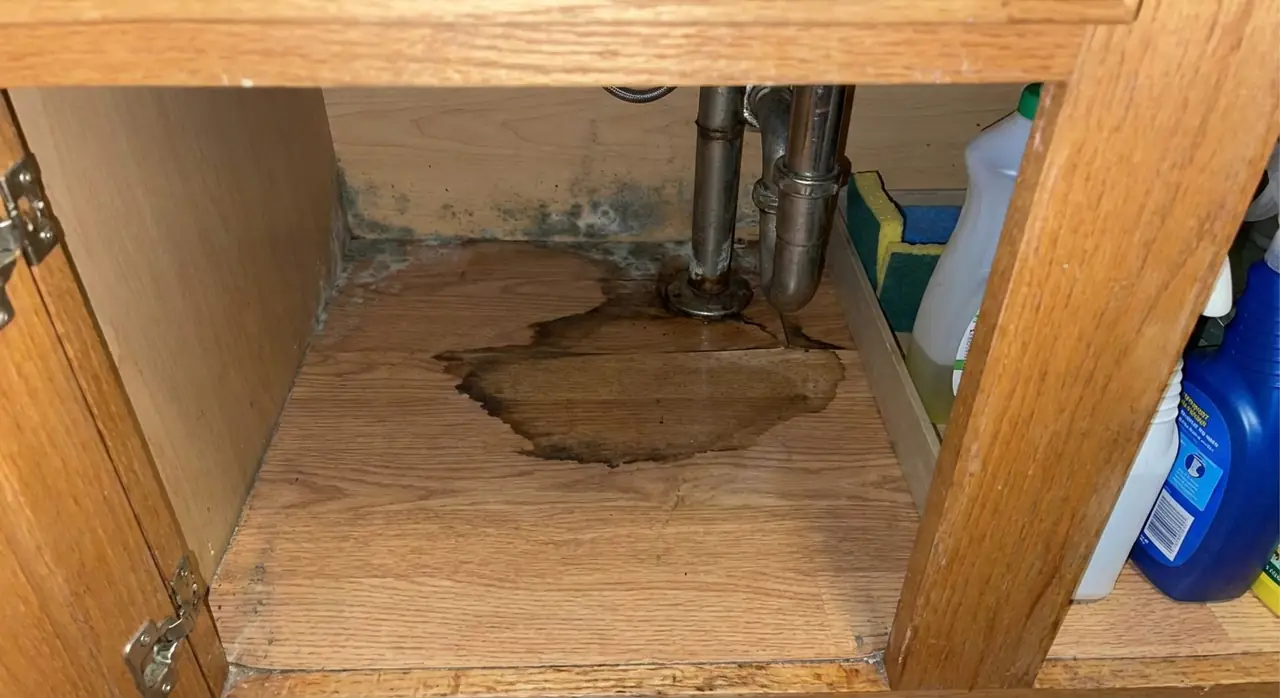
The cabinet above is the whole argument for periodic inspections in one photo. That stain is a slow supply-line or drain leak, and a five minute look under the sink catches it while it is still a washer and a towel. Left alone until move-out, it becomes a swollen cabinet, a rotted floor, and the mold problem the EPA's mold guidance warns grows behind unseen moisture.
- Water and plumbing: under every sink, around toilets and tubs, water heater, and any ceiling or wall stains that signal a leak above.
- Moisture and mold: bathrooms, window sills, basements, and anywhere with poor ventilation or a musty smell.
- Heating and cooling: that the system runs, and that filters have been changed rather than caked shut.
- Appliances: that the ones you provide work and show no leaks or scorching.
- Pests: droppings, nests, or signs of an infestation that needs professional treatment.
- Structural and weather: roof or window leaks, failing caulk, and exterior issues you can see.
Safety items are not optional, and a missed one can carry liability far beyond a deposit. Test the smoke and carbon monoxide detectors, confirm there are enough of them, and replace dead batteries on the spot. The placement and testing basics are laid out by the U.S. Fire Administration.
Last, note the general condition and any obvious lease issues. An unauthorized pet, a second resident who is not on the lease, or smoke damage in a non-smoking unit are worth recording calmly and factually, with a photo and a date.
Document Each Finding the Same Way Every Time
A periodic inspection is only useful if it leaves a record you can find later. A finding you remember but cannot prove is worth nothing six months on. The unit of work is the same as in any condition record: a photo, a short note, and a date, tied to the specific spot.
Walk the unit in the same order every visit so nothing gets skipped, and shoot wide for context then close for the detail. Where a problem is developing, photograph it now and again at the next visit so you can show the trend. This is the same discipline that powers a good property condition report, just repeated on a schedule.
Keep each visit's record with the others so the history is continuous. When move-out finally arrives, that timeline tells you whether a problem was a slow decline you flagged twice or sudden damage the tenant caused, which is exactly the distinction a deposit case turns on.
Why the Record Pays Off Later
The repairs you catch early are the obvious win, but the documentation is the quiet one. A continuous condition history protects you in a deposit dispute, supports an insurance claim, and shows you met your duty to maintain a habitable home.
It also feeds the comparison that decides a deposit. The whole question at move-out is what changed since move-in, and periodic records show the change happening over time instead of appearing all at once. That is the same before-and-after logic behind documenting the difference between move-in and move-out.
Good rental records matter for taxes as well, since repairs and improvements both have to be substantiated. The recordkeeping expectations for a rental are covered in IRS Publication 527, and a dated photo trail is part of how you back those numbers up.
Make It a Routine, Not a Scramble
The hard part of periodic inspections is consistency, not difficulty. The same checklist, walked the same way, with each finding photographed and dated, is what turns scattered visits into a record you can rely on.
A property inspection app makes that routine stick, because it pairs each finding with its dated photo as you walk the unit and keeps every visit in one place. When the visit is done you can turn your inspection photos into a condition report without retyping anything, and over a tenancy you keep dispute-ready condition records that line up from move-in to move-out.
If you want the same structure for the bookend walkthroughs, our free move-in and move-out checklist gives you a room-by-room record you can reuse, and our guide to what a move-out inspection should cover shows how the final visit ties back to everything you recorded along the way.
It is worth saying plainly what this report is and is not. It is structured condition documentation you create from your own photos, reviewed and edited by you before it is final. It is not a licensed or professional home inspection or appraisal, and it is not legal advice or a substitute for either.
Inspect on a sane schedule, give proper notice, record the maintenance and safety items the same way every time, and the rest takes care of itself. The cheap fix you catch in month four and the dispute you avoid at move-out are the same habit paying off twice.
Turn your next walkthrough into a clean report
Snap photos at move-in, move-out, or a routine inspection and get a branded condition report you can hand a tenant or keep on file.
✓ Review every finding before you finalize ✓ Web report and PDF ✓ Cancel anytime
Frequently Asked Questions
There is no single rule, but a common cadence is once or twice a year for a settled tenant, sometimes quarterly for a new tenant or a higher-risk unit, often timed to the seasons. Inspecting much more often can read as harassment and may cross a legal line, so write your schedule into the lease and keep it reasonable.
Almost always, yes. Most states require advance written notice of a reasonable amount, commonly 24 to 48 hours, and entry at a reasonable time. Confirm your state and local rules, send the notice in writing with the date, time window, and reason, and keep a copy.
Lead with the things that get worse when ignored: water and plumbing leaks, moisture and mold, heating and cooling, appliances, and pests. Test the smoke and carbon monoxide detectors and note any obvious lease issues. Photograph and date every finding so you have a record you can use later.
No. It is structured condition documentation a landlord or property manager creates from their own photos, and you review and edit every finding before it is final. It is not a licensed or professional home inspection or appraisal, and it is not legal advice. Consult an attorney or your local housing authority for the rules in your area.